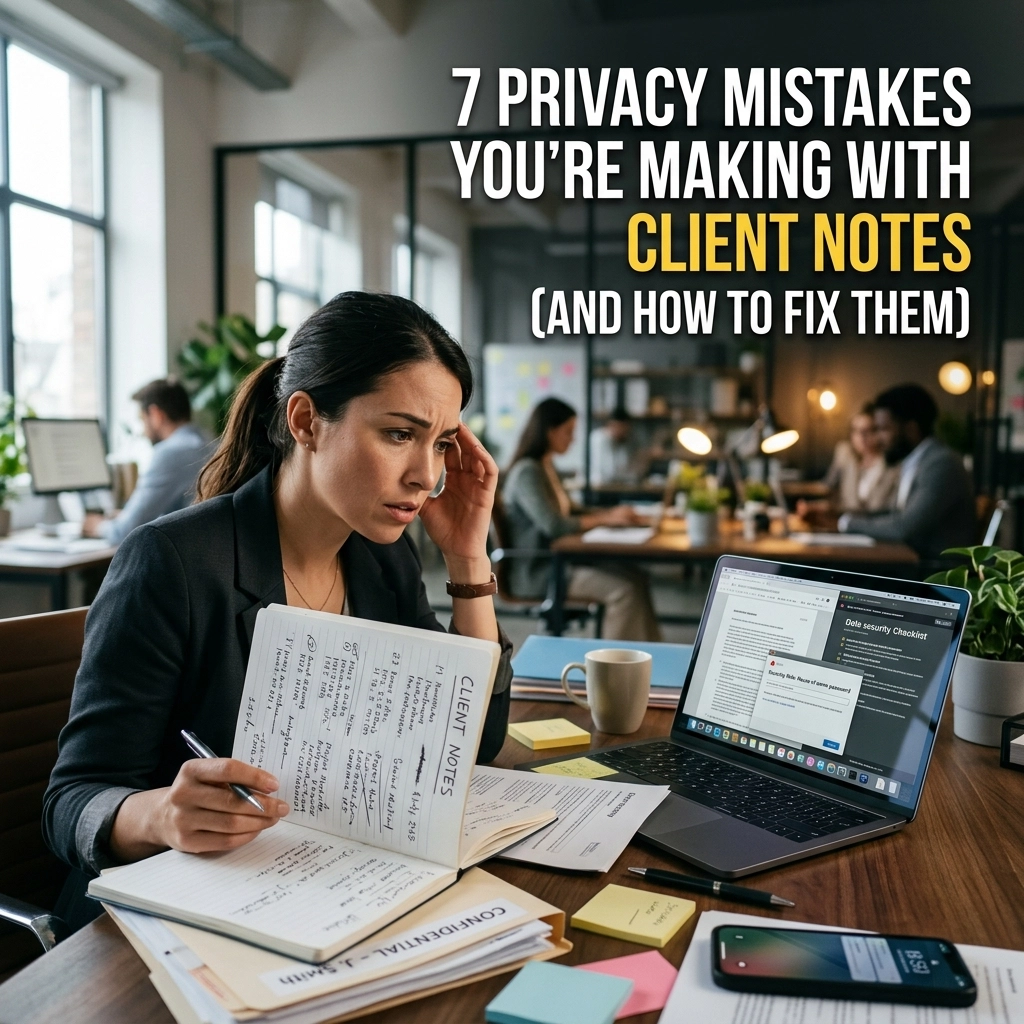
You are a legal professional. Your reputation is built on trust. Your license depends on confidentiality. Every word you record, type, or store is a potential liability. Most lawyers think they are secure. They use "the cloud." They use "secure" apps. They are wrong.
In the legal world, a privacy breach isn't just an IT problem. It’s a career-ending event. You handle sensitive disclosures, corporate secrets, and Protected Health Information (PHI). If you are using standard dictation tools, you are likely leaking data.
Stop compromising. Start protecting. Here are the seven privacy mistakes you are making right now and exactly how to fix them.
1. Using "Cloud-First" Transcription Services
Stop sending your audio to someone else’s server.
When you use a cloud-based transcription service, your client’s most sensitive words leave your device. They travel across the internet. They land on a server owned by a third party. You don't know who has access to that server. You don't know where it's located.
Even if they promise encryption, the "keys" to that encryption are held by the provider. If they get hacked, your client notes are gone. If they get subpoenaed, your data is exposed.
The Fix: Go Offline.
Use tools that process audio locally. Your data should never leave your machine. If the transcription happens on your hardware, the risk stays at zero. Real privacy requires an air gap.

2. Training AI Models on Your Client Data
You are likely working for free for Big Tech.
Most "free" or subscription AI note-takers use your data to "improve their models." This means an algorithm is scanning your client’s deposition, your strategy notes, and your HIPAA-sensitive files to learn how to speak better.
This is a massive ethical violation. You are effectively sharing privileged information with a machine learning database. Once that data is ingested, you can’t "un-train" the model. Your client’s secrets are now part of a global dataset.
The Fix: Use Private AI.
Switch to VoiceType. We don't train on your data. We don't see your data. Our AI lives on your computer, not in our headquarters. Own your intelligence. Don't rent it from companies that harvest your notes.
3. Dictating Over Public Wi-Fi
Coffee shops are for caffeine, not for case notes.
If your dictation software requires an internet connection to work, you are vulnerable. Public Wi-Fi is a playground for packet sniffing. Even with a VPN, you are adding unnecessary "hops" to your data’s journey.
Every time your app "syncs" to the cloud, it opens a window. Hackers look for those windows. They don't need to break your password if they can catch the data while it's moving.
The Fix: Disable the Connection.
Demand software that works in Airplane Mode. If you can’t dictate while 30,000 feet in the air without Wi-Fi, your software isn't secure enough for the ground. True HIPAA-readiness means being functional without a signal.
4. Mixing Personal and Professional Data Silos
Your phone is a privacy nightmare.
You record a quick note on your built-in voice memo app. That app automatically syncs to your personal iCloud or Google Drive. Now, your client’s sensitive medical history is sitting next to your vacation photos.
Personal cloud accounts are rarely HIPAA-compliant. They lack the necessary Business Associate Agreements (BAA). They are the weakest link in your professional chain.
The Fix: Categorize and Isolate.
Use a dedicated professional utility for all client notes. Ensure that utility does not "auto-sync" to personal libraries. Keep your legal work in a hardened, local container.

5. Trusting "Deleted" Data on Subscription Platforms
"Delete" is often a lie.
When you hit delete on a web-based platform, the data is usually just marked as "hidden." It sits in a "trash" folder on a remote server for 30 to 90 days. Sometimes, it stays in their backups forever.
In a legal discovery phase, "hidden" data is still discoverable. If you don't control the physical storage, you don't control the deletion.
The Fix: Local Storage Control.
Store your notes as local files on your encrypted hard drive. When you delete a file on your machine using secure wipe protocols, it is gone. You hold the power, not a Silicon Valley admin. Check out our sitemap to see how we prioritize local-first workflows.
6. Ignoring the "Minimum Necessary" Standard
You are saying too much.
Lawyers often record entire sessions and keep the full audio indefinitely. This creates a massive "attack surface." If that one-hour audio file contains five minutes of PHI and fifty-five minutes of fluff, the whole file is a liability.
The HIPAA "Minimum Necessary" standard applies to legal professionals handling health data. You should only keep what is required for the case.
The Fix: Dictate Summaries, Not Streams.
Instead of recording hours of raw audio, use high-speed dictation to create concise, professional summaries. Convert your thoughts to text instantly and discard the raw audio. Text is easier to encrypt, easier to manage, and harder to leak.

7. Relying on Software "Rentals" (Subscriptions)
Subscriptions are a privacy risk masquerading as a convenience.
When you pay a monthly fee for a transcription service, you are "renting" access to your own productivity. If you stop paying, you lose access. If the company goes bankrupt, your notes vanish.
More importantly, subscription models require "phoning home." The software must check with the central server every few days to see if your credit card cleared. Every "check-in" is a metadata leak. It tells the provider when you are working, where you are, and how often you use the tool.
The Fix: Buy Your Tools.
Invest in "Buy Once, Own Forever" software. Professional tools should be utilities, not services. You don't rent your office chair; don't rent the software that handles your most confidential thoughts. Ownership equals control. Control equals privacy.
Reclaim Your Privacy with VoiceType
The "old way" of doing things was slow. You dictated into a tape recorder, handed it to a secretary, and waited days. It was private, but it was inefficient.
The "modern way" is fast, but it’s dangerous. You speak into a cloud app, get an instant transcript, and hope no one is watching.
There is a "new way." The VoiceType way.
We built VoiceType for the legal professional who refuses to choose between speed and security. Our software lives on your Mac or PC. It uses your computer’s hardware to turn speech into text. No internet required. No data leaving your room. No subscription "check-ins."
It is HIPAA-ready by design.
Because we never see your data, we can't lose it. Because we don't have a server, we can't be hacked.
It is efficient.
Stop typing. Start talking. Reclaim two hours of your day. Dictate your briefs, your emails, and your client notes at 150 words per minute with 99% accuracy.
It is yours.
One payment. Lifetime ownership. Total privacy.
Direct. Fast. Secure. That is the VoiceType promise. Stop making mistakes with your client notes. Fix your workflow today.

Leave a Reply