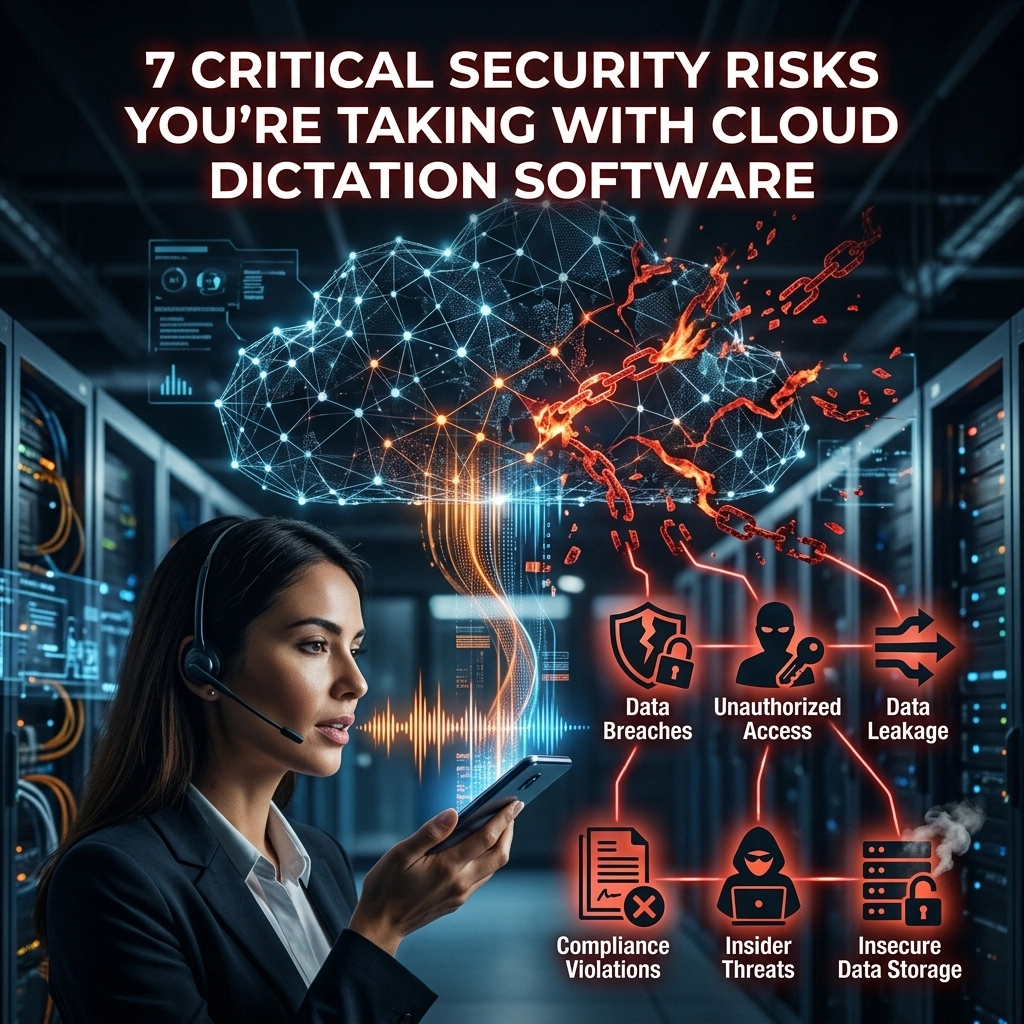
Security is not an afterthought. It is the foundation.
You are an IT professional. You protect the perimeter. You lock down the endpoints. Yet, your users are leaking sensitive data every single day. They do it through their microphones.
Cloud dictation software is the hidden back door. It is convenient. It is fast. It is also a massive security liability. Every word spoken is a data packet sent to a server you do not control.
Stop settling for "good enough" security. Understand the risks. Reclaim your data.
1. Data Transit Vulnerabilities
The cloud requires a journey. Your audio data starts at the microphone. It travels across the local network. It hops through the public internet. It finally lands in a remote data center.
Every hop is a point of failure. Man-in-the-middle attacks are real. Encryption can be stripped. Certificates can be forged. When you record sensitive corporate strategy or patient data, you are gambling on the integrity of the entire internet path.
Stop sending audio over the wire. Local AI eliminates the journey. No transit means no intercept.
2. The Black Box of Third-Party Storage
Where does the audio go once it hits the cloud? You don't know. You have a "Privacy Policy." It is a document written by lawyers to protect the provider, not you.
Most cloud tools store your audio for "quality assurance." This is code for human review. Low-wage contractors could be listening to your executive meetings. They are transcribing your trade secrets to train a model.
You lose custody the moment you hit "record."

3. The Biometric Breach
Your voice is a biometric identifier. It is unique. It is permanent. You can change a password. You cannot change your voice.
Cloud dictation providers are massive targets for state-sponsored actors. A breach doesn't just leak text. It leaks voice prints. Once a hacker has your voice, they have the key to your social engineering defenses. They can deepfake your CEO. They can bypass voice-authenticated banking.
Keep your biometrics on your hardware. Air-gapped AI ensures your voice print never leaves the room. Use VoiceType to keep your identity under lock and key.
4. Regulatory Non-Compliance
HIPAA, GDPR, and SOC2 are not suggestions. They are requirements.
Cloud providers often claim compliance. Read the fine print. The "Shared Responsibility Model" shifts the blame to you. If a cloud tool stores data in a region that violates your residency requirements, you pay the fine. If they suffer a leak, you lose the reputation.
Audit your stack. If the data leaves the device, you are out of control. Local processing is the only way to guarantee 100% data residency. You own the hardware. You own the logs. You own the compliance.

5. Shadow IT and Unmanaged Endpoints
Convenience breeds shadow IT. Your employees want to save time. They find a "free" cloud dictation tool. They install the browser extension. They grant it microphone access.
Now, a startup with zero security budget has a live ear in your office. They are recording every meeting. They are indexing every whisper.
You cannot manage what you cannot see. Centralize your dictation. Deploy a local solution that doesn't need an internet connection. Block the cloud alternatives at the firewall.
6. Permanent Data Retention
Delete doesn't always mean delete.
In the cloud, data persists. Backups are made. Logs are archived. Even if you "delete" a transcript, the underlying audio may sit in a "cold storage" bucket for years. It is a ticking time bomb.
If your company is subpoenaed, that data is discoverable. If the provider is breached five years from now, your old data is exposed.
Local AI solves this. When you delete a file on your machine, it is gone. No hidden backups. No secondary storage. Total control over the data lifecycle.

7. The Subscription Trap and Vendor Lock-in
Cloud tools are rented. You pay every month for the privilege of risking your data.
If the provider raises prices, you pay. If they change their terms of service, you accept. If their servers go down, your productivity stops. You are a hostage to their uptime and their whims.
Security also means availability. An internet outage shouldn't paralyze your workforce. Local AI works in a basement. It works on a plane. It works during a DDoS attack. It is a utility you own, not a service you lease.
The Solution: Air-Gapped, Local AI
The old way is broken. The cloud is too loud, too slow, and too risky.
You need a new standard. You need dictation that stays on the device. No internet required. No data leaving the CPU. No third-party eyes.
This is why we built VoiceType. We believe productivity shouldn't cost you your privacy.
Why Local AI Wins:
- Zero Latency: Processing happens on the chip. No lag.
- Total Privacy: No data packets ever leave your machine.
- Ultimate Security: If the computer is air-gapped, the data is untouchable.
- Ownership: One tool. Your hardware. Your data.

Reclaim Your Privacy
Stop feeding the cloud. Stop giving away your biometric data. Stop hoping the "Privacy Policy" protects you.
Take control. Switch to local AI dictation.
Security professionals know that the only safe data is the data you never send. It is time to treat your voice with the same respect you treat your source code.
Dictate with confidence. Use VoiceType and keep your secrets where they belong: with you.
The shift is happening.
IT leaders are moving away from bloated, risky cloud subscriptions. They are moving toward lean, powerful, local utilities. Be the leader who secures the voice of the company.
Direct. Fast. Secure. That is the only way forward.
Leave a Reply